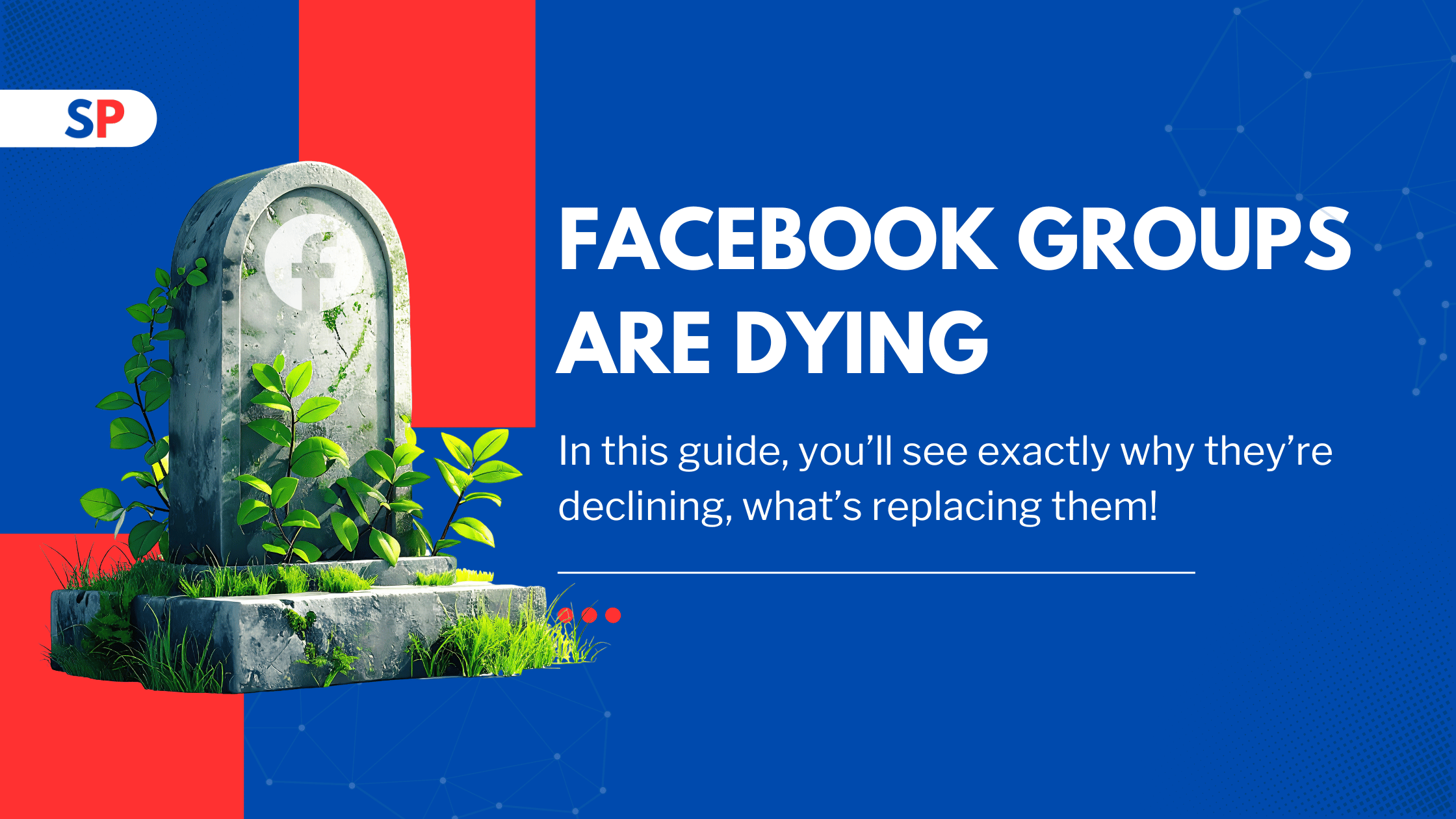
If you’ve felt your Facebook Group getting noisier, less engaged, and harder to manage, you’re not imagining it.
Creators, coaches, and entrepreneurs everywhere are quietly asking the same question:
“Are Facebook Groups dying… and what should I use instead?”
Short answer: yes, traditional Facebook Groups are in decline for serious structural reasons—algorithm changes, spam, distractions, and lack of control. And a new wave of **focused community platforms like **Skool is replacing them.
If you’re thinking about building a real community around your expertise, this is the moment to move. By the end of this post, you’ll know:
- Why Facebook Groups are losing their edge
- The specific features modern creators need (that Facebook simply doesn’t offer)
- How Skool combines community + courses + gamification into one simple platform
- Exactly how to migrate or launch your own Skool community in a weekend
If you’re already convinced you need a better home for your audience, you can skip ahead and start your own Skool community using this link: Launch your Skool community now.
The Reality: Facebook Groups Aren’t What They Used To Be
For years, Facebook Groups were the default place to build a free community.
- Easy to set up
- Billions of users already on the platform
- Simple to invite and tag people
But the landscape has shifted. What worked in 2016 is not working in 2026.
Here’s what most creators are experiencing right now:
- Declining reach and engagement
- Endless spam and low-quality posts
- Members distracted by the main Facebook feed
- Features that feel bolted-on, not built for serious creators
If you’re frustrated, it’s not because you’re doing anything wrong. The platform itself is working against you.
Why Facebook Groups Are In Decline (The 7 Big Reasons)
Let’s break down the core issues one by one.
1. Algorithm Changes Are Killing Organic Reach
Facebook’s business model is advertising. Their priority is keeping people on the platform and feeding them content that maximizes ad views—not necessarily posts from your group.
Consequences for your community:
- Members miss important announcements
- Launch posts get buried
- Engagement looks artificially low even when people want to see your content
You can post a high-value training and only a tiny fraction of your members ever see it in their feed.
2. Constant Distractions Destroy Focus
Your group lives inside an environment designed to distract:
- Notifications from friends, pages, ads, and other groups
- Reels, memes, politics, drama
- Infinite scroll that pulls people away from your content
So even if someone intends to watch your training or participate in your challenge, they get pulled into:
“I’ll just check my messages real quick…”
and suddenly your group is an afterthought.
Communities need focused attention to thrive. Facebook is the opposite of focused.
3. Spam and Low-Quality Posts Wear Everyone Out
It’s become painfully common:
- “DM me for a coaching opportunity” comments
- Link dropping and self-promotion
- Generic “value posts” that are thinly veiled pitches
You either:
- Lock posts down and become a full-time moderator, or
- Let it run and watch your group quality slide
Either way, your best members start to tune out. They came for transformation, not a classifieds board.
4. Clunky Organization: Everything Gets Buried
Try this experiment: ask your members if they can easily find your best content from three months ago.
You already know the answer.
Facebook Groups are basically one long, messy feed. You can pin a couple of posts, maybe use a “guides” feature, but:
- Onboarding gets confusing
- New members don’t know where to start
- High-value trainings disappear under memes and questions
It’s chaos. And chaos kills momentum.
5. No Native Course Experience
If you sell coaching, digital products, or a membership, you probably end up duct-taping tools together:
- Courses on one platform
- Community in a Facebook Group
- Calls on Zoom
- Payments via Stripe or PayPal
Your people have to juggle multiple logins, platforms, and interfaces. You have to manage support tickets like:
“Where do I find the lessons again?”
Facebook was never built as a course platform, so you’re constantly working around its limitations.
6. You Don’t Really Own the Relationship
This one is big.
- Facebook controls the platform
- Facebook controls the algorithm
- Facebook controls the data
They can:
- Shut your group down
- Limit your reach further
- Change features overnight
You’re essentially renting space in someone else’s mall—and paying with your audience’s attention.
7. Fatigue: People Are Just Over Facebook
Many of your best clients and students are:
- Reducing social media usage
- Deleting the Facebook app from their phone
- Only logging in for very specific things
If the only place your community lives is on a platform people are actively avoiding, you’re building on sand.
What’s Replacing Facebook Groups? The Rise of Dedicated Community Platforms
As Facebook Groups decline, creators are shifting to community platforms built specifically for learning, accountability, and transformation.
If you’ve searched for “Facebook group alternatives” or “community platforms 2026”, you’ve likely seen names like:
- Skool
- Circle
- Discord
- Mighty Networks
They all recognize the same thing: serious communities need their own focused space.
But not all alternatives are equal—especially if you sell courses, coaching, or high-ticket programs.
Why Skool Is Emerging As the Best Facebook Group Alternative
Skool is one of the fastest-growing community platforms for creators who want to teach, engage, and monetize under one roof.
Here’s what it does in a sentence:
Skool combines community + courses + gamification + events in a single, simple interface your members actually enjoy using.
And yes, you can start your own group through this affiliate link: Start your Skool community here.
Let’s walk through what makes it such a strong replacement for Facebook Groups.
1. Clean, Focused Community (No Drama, No Feed Overload)
Skool looks and feels like a modern social app—but with one big difference: it’s all about your community.
- No random ads
- No political arguments
- No unrelated notifications
Members log in and see:
- Your community feed
- Your courses
- Your calendar of calls/events
That’s it. Pure focus on what moves them forward.
2. Built-In Courses Right Next to the Community
Unlike Facebook, Skool has a full courses tab natively built into every community.
You can:
- Upload video lessons (hosted on Vimeo, Loom, YouTube unlisted, etc.)
- Organize modules and lessons
- Add resources, links, and downloads
- Lock modules behind levels or subscriptions
Your members don’t have to jump between platforms or remember multiple logins. They click “Classroom”, and everything is there.
This dramatically improves:
- Completion rates
- Perceived value
- Member satisfaction
3. Gamification: Levels, Points, and Leaderboards
One of Skool’s secret weapons is its gamification system.
Members earn points for:
- Posting valuable content
- Commenting
- Helping others
- Completing lessons (if you choose to reward that)
Those points turn into levels, and you can unlock rewards at each level, such as:
- Bonus trainings
- Private calls
- Special resources
- VIP channels
This creates a powerful loop:
Engage → Earn points → Unlock value → Engage more
You don’t have anything like this in Facebook Groups without bolting on complicated third-party tools.
4. Simple, Intuitive Interface (Your Members Will Actually Use It)
Skool is deceptively simple:
- A Community tab (the main feed)
- A Classroom tab (your courses)
- A Calendar tab (your events)
- A Members tab (profiles and DMs)
Everything is where you’d expect it. Members don’t need a training video to figure it out.
This simplicity is a big part of why people stick and keep coming back.
5. Events and Calendar Built In
Instead of pinning Zoom links in posts that get buried, Skool lets you:
- Create recurring or one-off events
- Add Zoom links or meeting details
- Show events in a simple calendar view
- Automatically convert to each member’s time zone
Members can click “Going” and get reminders, so attendance goes up and confusion goes down.
6. Searchable, Structured Content
On Skool, your posts live in a searchable, categorized feed, not a chaotic stream.
You can:
- Use categories (e.g., Wins, Q&A, Tech Support, Resources)
- Pin key posts
- Encourage members to search first, ask second
Your best content becomes evergreen, not disposable.
7. Better Ownership and Control
No platform gives you 100% control, but compared to Facebook, Skool offers:
- A distraction-free, dedicated home for your brand
- More stable feature-set built for creators
- Direct relationship with your paying members
You’re not at the mercy of a social media giant whose incentives don’t align with your business.
Skool vs Facebook Groups: Quick Comparison Table
Here’s a side-by-side look at how Skool stacks up as a Facebook Group alternative:
| Feature / Experience | Facebook Groups | Skool |
|---|---|---|
| Primary purpose | General social networking | Courses + communities for creators |
| Algorithm control | Facebook decides who sees what | Chronological + sticky posts + categories |
| Distractions | High (ads, reels, feed, messages) | Low (only your community content) |
| Built-in courses | No | Yes, full course/classroom system |
| Gamification (points/levels) | No | Yes, native levels, points, leaderboards |
| Events/calendar | Limited events, messy visibility | Dedicated calendar tab with reminders |
| Organization of posts | One long feed, hard to find old content | Categories + search + pinned posts |
| Ownership/control | Platform-first, ad-driven | Creator-first, community-focused |
| Member experience | Social media vibe, lots of noise | Clean, focused, purpose-driven |
If you’re serious about growing a community around your expertise, Skool is designed for exactly that. You can claim your space here: Create your Skool community.
Common Objections to Leaving Facebook (And Clear Answers)
When creators consider moving off Facebook, a few concerns always come up.
Let’s address them head-on.
“But all my people are already on Facebook.”
True—but they’re also on email, YouTube, and their phones.
The real question is: will they go somewhere new if there’s enough value?
In practice, people happily join:
- Slack workspaces
- Discord servers
- Private portals
If your community helps them solve a painful problem or achieve an exciting goal, they’ll follow you to a place that:
- Is cleaner
- Is easier to use
- Gives them better results
“Isn’t it hard to get people to join another platform?”
It doesn’t have to be.
You can design a simple transition plan:
- Announce the move: Explain why you’re moving and what they gain (less noise, better access, exclusive content).
- Create a strong hook: Offer something only available inside Skool (e.g., a free mini-course, weekly office hours, or a challenge).
- Send clear invites: Share your Skool link in posts, email, and DMs.
- Close or freeze the old group: Gradually shift energy away from Facebook to the new home.
Members will follow the energy. If all the action is in Skool, that’s where they’ll go.
“Do I have to shut down my Facebook Group completely?”
Not necessarily.
Some creators keep a lightweight, free Facebook Group as a top-of-funnel awareness tool and make Skool the main hub for:
- Paying clients
- Serious learners
- Focused conversations
You can gradually push people from Facebook to Skool by saying, “If you want the good stuff, come here.”
“Will I lose engagement switching platforms?”
You might see a temporary dip as people adjust—but in most cases, engagement quality goes up because:
- The people who move are your most serious members
- The environment encourages depth over noise
- Gamification rewards participation
Instead of chasing likes from random lurkers, you build with your true fans.
How to Move from Facebook Groups to Skool (Step-by-Step)
You don’t have to shut everything down and start from zero. Here’s a practical migration roadmap you can follow.
Step 1: Clarify the Purpose of Your New Skool Community
Before you do anything technical, answer this:
What transformation is this community helping people achieve?
Examples:
- “Help busy professionals launch profitable side businesses.”
- “Help fitness coaches get more clients online.”
- “Help agency owners productize and scale.”
This shapes:
- Your community name
- Your course structure
- Your content strategy
Step 2: Create Your Skool Community
Go to Skool and create your community.
Inside, you’ll:
- Name your community
- Add a cover image and description
- Set up categories for posts (e.g., Introductions, Wins, Q&A, Resources)
Don’t overthink design. Focus on clarity and value.
Step 3: Build a Simple Course or Starter Path
Even if your main offer is coaching, having a clear starting point for new members is huge.
In the Classroom tab, create:
- A “Start Here” module with 2–4 short videos:
- Welcome + community expectations
- How to use Skool
- Where to ask questions
- What success looks like in this community
If you sell a program, you can:
- Import or link your core curriculum
- Break it into logical modules
- Add any worksheets or templates as resources
Step 4: Set Up Gamification and Rewards
Leverage Skool’s gamification from day one.
Ideas for level-based rewards:
- Level 1–3: Access to basic community + intro training
- Level 4–6: Bonus Q&A recordings or resource library
- Level 7+: Private “inner circle” calls or channels
This motivates members to:
- Introduce themselves
- Ask better questions
- Share wins and insights
Step 5: Seed the Community With Content
Before inviting the masses, seed your Skool group with useful content:
- A welcome post
- A clear “Start Here: Read This First” post
- A few FAQ posts answering common questions
- Maybe one or two quick wins or templates
You want new members to join and immediately think, “Oh, this is valuable.”
Step 6: Invite Your Facebook Group (With a Strong Reason)
Now, go back to your Facebook Group and:
- Pin an announcement explaining the move:
- Why you’re doing it (less noise, better tools)
- What’s waiting inside Skool (exclusive trainings, organized content)
- Share your Skool link in:
- Pinned posts
- Live videos
- Email newsletters
- Give a deadline:
- For example: “In 30 days, I’ll be focusing 100% of my time on the Skool community—join us there to stay plugged in.”
Humans respond to clear deadlines.
Step 7: Shift Your Energy Fully to Skool
Once your Skool group is running:
- Answer questions there first
- Host calls and events on the Skool calendar
- Share wins and client results inside Skool
Use Facebook as a pointer: “The party’s over here now.”
If you stay half-in, half-out, your members will feel that. When you commit to Skool as your hub, they will too.
Using Skool for Courses + Community: A Simple Model
One of the biggest advantages of Skool over Facebook Groups is that it’s built from the ground up for course-based communities.
Here’s a simple model that works extremely well:
1. Core Course in the Classroom
Put your main training or curriculum in the Classroom tab. Organize it so members can follow a clear path.
Example structure:
- Module 1: Foundations
- Module 2: Strategy
- Module 3: Implementation
- Module 4: Scaling
- Bonus: Templates & Resources
2. Community for Support and Implementation
Use the Community tab for:
- Weekly Q&A threads
- Wins and progress updates
- Feedback on work
- Accountability check-ins
This turns information (your course) into transformation (real results) because people are supported while they implement.
3. Events to Create Rhythm and Habit
Add recurring events in the Calendar:
- Weekly Q&A call
- Monthly planning session
- Implementation sprints or co-working
Rhythm builds habit. Habit builds retention.
4. Gamification to Reward Action
Tie your community’s transformation to Skool’s levels and points.
Ideas:
- Award points for posting weekly progress
- Create a “Level X Challenge” that unlocks a bonus training
- Celebrate leaderboard winners each month
Suddenly, the platform itself helps you drive engagement and results.
When Should You Switch From Facebook to Skool?
If any of the following feel true, it’s time to at least test Skool:
- Your Facebook Group feels noisy and low-quality
- You sell courses, coaching, or a membership
- You’re tired of duct-taping multiple tools together
- You want more control and a clearer, more professional member experience
You don’t have to burn everything down to start. You can:
- Launch a private Skool community for clients first
- Test engagement for 30–60 days
- Gradually invite your wider audience once you see momentum
The creators who win over the next few years will be the ones who own their platforms and build intentional spaces—not the ones hoping a social media algorithm will cooperate.
If you want to be in that first group, this is your cue to move: Open your Skool account here.
FAQ: Facebook Groups vs Skool
1. Is Skool free to start?
2. Do my members need a Facebook account to use Skool?
3. Can I keep my Facebook Group and still use Skool?
4. How hard is it to move my content from Facebook to Skool?
5. What types of communities work best on Skool?
6. How do I get people to actually use Skool instead of forgetting about it?
Conclusion: Facebook Groups Had Their Time—Now It’s Yours
Facebook Groups were a powerful tool for a long time. But the combination of algorithm changes, spam, distractions, and lack of ownership means they’re no longer the best home for serious, transformation-driven communities.
If you:
- Want a focused space for your best people
- Sell courses, coaching, or a membership
- Are tired of duct-taping platforms together
…then it’s time to step into a platform that’s actually built for what you do.
Skool gives you:
- A clean, distraction-free community
- Built-in courses and content organization
- Events, gamification, and powerful engagement tools
Most importantly, it gives your members a better experience—which translates into better results, stronger retention, and a more durable business.
If you’re ready to stop fighting a dying platform and start building something you truly own, now is the best time to move.
Start your Skool community today: Create your group on Skool.
More tools you might like
If you’re building an online education or coaching business, you’ll likely need more than just a community platform.
For help shipping code and technical features faster, check out CodeFast.
And if you want your Skool community and offers to rank higher in search and attract more organic traffic, explore Outrank to support your SEO and content strategy.