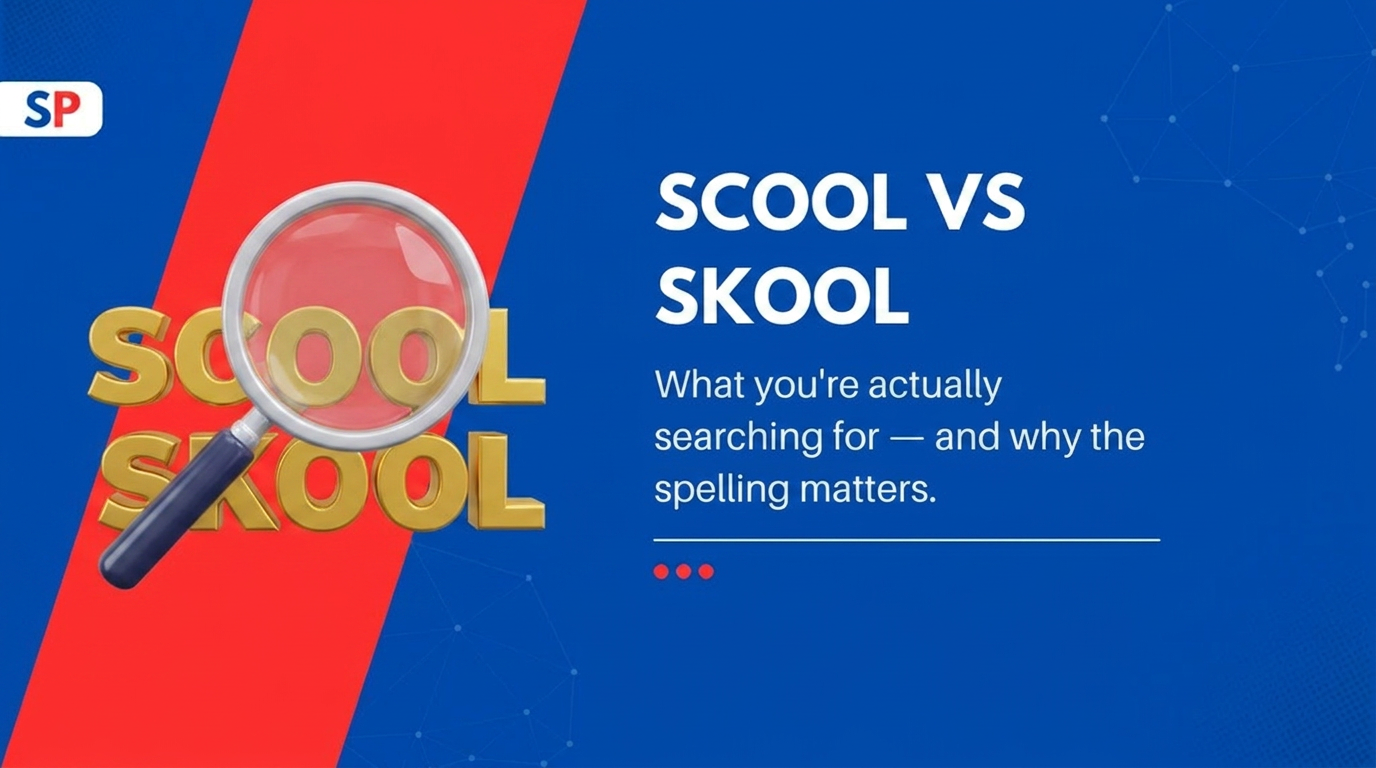
If you searched for “scool” and landed here, you’re not lost — you’ve just found Skool with a slightly different spelling. Skool.com is a fast-growing community and course platform that thousands of creators, coaches, and entrepreneurs are using to build paid online communities and earn recurring revenue.
Whether you found this page via autocorrect, a friend’s message, or a Reddit thread, here’s everything you need to know about what Skool actually is — and whether it’s worth your time. If you’re ready to explore, you can sign up for Skool here and browse communities in any niche.
So… What Is “Scool”?
There is no platform called Scool. The word you’re looking for is Skool — spelled S-K-O-O-L — the brainchild of entrepreneur Sam Ovens and backed by Alex Hormozi, who invested in the company and has become one of its most well-known advocates.
The misspelling is incredibly common. People type “scool,” “skol,” “skool community,” and even “school app” when they’re trying to find Skool — and they all mean the same thing. The intentional misspelling in the brand name was designed to make it memorable and searchable, which clearly works — even when people don’t spell it right on the first try.
What Is Skool, Exactly?
Skool is a community and course platform built specifically for creators, coaches, and community leaders. Unlike traditional course platforms (Teachable, Thinkific, Kajabi), Skool puts the community front and centre, with course content as a supporting feature — not the main event.
Here’s what every Skool community includes:
- A community feed: Like a private social media wall where members post, share wins, ask questions, and connect
- A classroom: Where course content, videos, and resources live — unlockable by level or open to all
- A calendar: For scheduling live calls, events, and coaching sessions
- A leaderboard: A gamification system that rewards members for engagement — likes, posts, comments, and course completions all earn XP
- Member profiles: Full bio pages, social links, and engagement history
It’s simple by design. Skool deliberately strips away the complexity that slows down most creators — no funnels, no email automations, no 47-step setup. You build your community, set your price, and go.
Who’s Using Skool?
Skool has become the default platform for a specific type of creator: someone who wants to sell access to a community, not just a course. The platform is popular with:
- Coaches and consultants who want accountability groups around their methods
- Fitness and health creators running workout communities or nutrition programs
- Business educators teaching marketing, sales, or entrepreneurship
- Hobbyists and niche creators — everything from guitar players to miniature painters
- Agency owners and freelancers building B2B peer communities
Many well-known names in the creator economy are active on Skool, including Alex Hormozi’s community, various Acquisition.com-adjacent groups, and thousands of independent creators earning anywhere from $1,000 to $100,000+ per month.
Skool Plans: What Does It Cost?
Skool has two pricing tiers:
| Plan | Monthly Cost | Transaction Fee | Key Features |
|---|---|---|---|
| Hobby | $9/month | 10% of revenue | Community, courses, calendar, affiliate program, custom domain |
| Pro | $99/month | 2.9% of revenue | Everything in Hobby + a lower transaction fee |
The math is straightforward: if you’re earning less than roughly $1,200/month in community revenue, the Hobby plan is more affordable. Once you cross that threshold, the Pro plan pays for itself by eliminating most of the 10% cut.
If you’re just starting out, $9/month is an incredibly low barrier to test whether people will pay for what you’re building. Start your Skool community here and you’ll be up and running within the hour.
What Makes Skool Different From Other Platforms?
If you’ve been comparing platforms and keep seeing Skool come up, here’s what the others don’t tell you about why it’s winning:
1. Engagement is genuinely higher
The gamification system — XP, leaderboards, level-gating — actually works. Communities on Skool consistently report higher post frequency, more comments, and better retention than the same communities previously on Discord, Facebook Groups, or Circle.
2. Discovery built in
Skool has its own internal discovery system where members can find and join communities. If you set up your community with the right keywords, members on Skool’s platform can stumble onto your group while browsing — completely free organic reach that no other platform offers.
3. Member-side simplicity
One of the hidden reasons Skool communities work better is that members actually use them. The interface is clean, mobile-friendly, and familiar enough that even non-technical people engage from day one. Compare that to Circle or Discord, where the learning curve kills retention for casual members.
4. Course + community in one
Instead of buying a course elsewhere and getting support via a Facebook Group, everything lives in one place. Members access their content and their community from a single login.
Skool vs Other Platforms: Quick Comparison
| Platform | Best For | Starting Price | Community Focus |
|---|---|---|---|
| Skool | Creators, coaches, communities | $9/mo + 10% | ⭐⭐⭐⭐⭐ |
| Kajabi | Full business suite, email | $69/mo | ⭐⭐ |
| Circle | White-label, enterprise | $89/mo | ⭐⭐⭐ |
| Teachable | Online courses | $39/mo | ⭐ |
| Discord | Free communities, gaming | Free | ⭐⭐⭐ |
If community engagement is the core product, Skool wins at every price point. If you need advanced email marketing, funnels, or white-labeling, you’d look elsewhere.
What You’ll Get as a Member vs. an Owner
One thing worth understanding: Skool is both a place to join communities (as a member) and a place to build communities (as an owner). These are very different experiences.
As a member, you pay a subscription (set by the owner), get access to the course content and community feed, earn XP by engaging, and can connect directly with the owner and other members.
As an owner, you pay Skool $9 or $99/month, set your own subscription price, control who joins, and earn the subscription revenue minus Skool’s transaction fee. You can run free or paid communities, use the affiliate program to reward members who refer others, and sell access via a custom domain.
The “Scool” Misspelling: You’re in Good Company
Here’s something interesting: because the brand name is deliberately unconventional, people regularly search for both “skool” and variations like “scool,” “skol,” and “what is skool.” If you found this page through one of those searches, you’ve effectively confirmed what millions of people are discovering — that the platform is gaining serious word-of-mouth traction.
The fact that you’re searching for it at all says something. Skool keeps coming up in YouTube comments, Reddit threads, podcasts, and Twitter/X posts because it’s the platform that people serious about building online businesses are actually using.
Conclusion: You Were Looking for Skool
If “scool” got you here, you’ve found what you’re looking for. Skool is the community + course platform that’s quietly changing how creators build recurring-revenue businesses online — and it starts at $9/month.
Browse some of the communities on the platform, or sign up as an owner if you’re ready to build your own. The setup is fast, the platform works, and there’s a reason it keeps coming up everywhere you look.